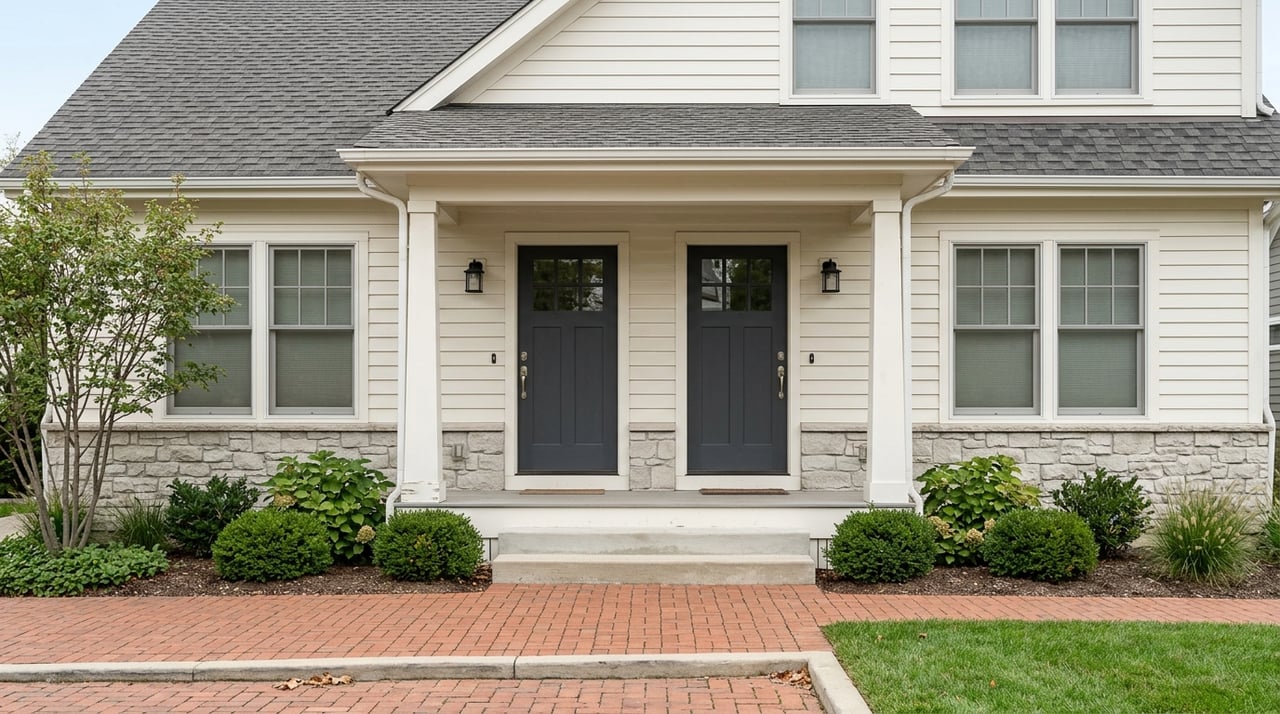
Brick NJ Multifamily Investing Insights for Buyers
April 2, 2026
April 2, 2026
If you are thinking about buying a multi-family property in Brick, NJ, the numbers can look promising at first glance. But this is not a market where you want to rely on surface-level rent estimates or assume every property works as an investment. In Brick, success usually comes down to careful due diligence, realistic expense planning, and understanding how a built-out shore community operates. Let’s dive in.
Brick is a large Jersey Shore township with 76,629 residents and 30,289 households, according to the U.S. Census QuickFacts for Brick Township. It also has an 82.2% owner-occupied housing rate, which tells you rentals are a smaller slice of the market rather than the dominant housing type.
That matters because multi-family property in Brick can be a niche opportunity. Township planning materials describe Brick as a built-out market with limited room for new supply, and local housing is still heavily weighted toward detached homes. For an investor, that can mean less competition from large amounts of new inventory, but it also means suitable duplexes and small apartment buildings may be harder to find.
Brick is not a market filled with endless multi-family options. A municipal self-assessment and planning documents from Brick Township show that detached housing makes up the vast majority of the local housing stock, while multi-family units are a smaller share.
That limited supply can make legally established duplexes and small apartment properties more appealing. It also means you should be careful about assuming a single-family home can be converted or expanded for income use without confirming what is actually permitted on that parcel.
Brick’s rental demand is shaped more by practical lifestyle needs than by an urban, transit-heavy pattern. The township’s 2025 housing and fair share planning materials identify major employment sectors such as education, health care and social assistance, retail, transportation and warehousing, professional services, and construction.
Commuting patterns also matter. The same planning report notes that 80.4% of workers drive alone, 2.2% use public transit, and 10.1% work from home. NJ Transit bus service connects Brick with New York, Newark, Jersey City, Camden, and Philadelphia, but in day-to-day housing choices, parking, road access, and commute convenience may matter just as much as the number of bedrooms.
Brick’s demographics suggest a relatively steady resident base. Census data shows that 21.4% of residents are age 65 or older, and 91.4% of residents lived in the same house one year ago. Township planning documents also note that some local vacancy is tied to seasonal use and second homes.
This does not guarantee rent growth, but it does support the idea that many tenants may be long-term local renters, downsizers, or year-round occupants. If you are underwriting a small multi-family property, that can be a useful lens when thinking about tenant turnover, unit design, and property upkeep.
When you estimate income, it helps to use conservative benchmarks. For the Monmouth-Ocean area, HUD’s FY2026 Fair Market Rents are:
These are not Brick-specific asking rents, so they should not replace property-level rent analysis. Still, they can help you stress-test whether a deal makes sense if rents come in lower than expected or if expenses run higher than planned.
One of the biggest realities of investing in Brick is the tax burden. The Brick Township Board of Education 2025 tax data shows a direct and overlapping property tax rate of 2.561 per $100 of assessed value.
For investors, this is not a small line item. High property taxes can narrow your cash flow quickly, especially on a smaller building where a few months of vacancy or a major repair can already put pressure on returns. If you are comparing Brick to lower-tax areas, make sure you are comparing the full operating picture, not just the purchase price.
In Brick, flood risk is a core part of investment analysis. The township’s Flood Warning Response Plan states that Brick has 53.2 miles of privately owned waterfront property and that about 20% of parcels are in the 1% flood zone.
That does not mean every investment property is high risk, but it does mean you should verify flood exposure early. FEMA flood maps are the official source for checking whether a property sits in a Special Flood Hazard Area, and flood insurance is required for most loans on properties in those areas.
If a property is in or near a flood-prone area, your cost analysis should include:
Many Brick properties are not new construction. Township planning sources say much of the housing was built in the 1940s to 1950s and 1970s to 1980s, while Brick’s 2023 action plan notes that many older homes need upgrades to insulation, plumbing, and electrical systems.
For a multi-family buyer, this means cosmetic improvements are only part of the story. You should also budget for bigger items like roofing, windows, HVAC, plumbing, electrical work, and moisture-related repairs. A property that looks rentable today may still need meaningful capital reserves over the next few years.
Before you assume a property can be used as a duplex or small apartment building, confirm the zoning and legal use. Brick’s planning materials include an R-M multifamily residential zone, and the Shore Acres Neighborhood Plan states that this zone permits garden apartments and condominiums at six units per acre.
The township’s 2023 action plan also notes that the Village Zone was created to allow mixed residential and commercial use, accessory apartments were encouraged in some business zones, and multi-family developments require a 15% affordable housing set-aside. The practical takeaway is simple: parcel-specific zoning verification is essential.
This is especially important if you are considering:
Brick has a defined rental compliance process, and this is one area where small investors can run into trouble if they move too fast. The township’s rental certificate of occupancy application states that tenants should not occupy a unit before the C.O. inspection passes, all property owners must complete landlord registration, and renting without a C.O. can lead to a summons.
Before closing, it is smart to review:
A good deal on paper can become expensive if the property is not ready for lawful occupancy.
Your financing path depends in part on whether you plan to live in the property. According to HUD loan guidance, FHA loans are available on 1 to 4 unit properties and can have a down payment as low as 3.5%. HUD also treats 2-unit and 3- to 4-unit properties as single-family residential properties for certain lending purposes, though special self-sufficiency rules apply to 3- to 4-unit properties.
For investment purchases, reserve requirements can be stricter. Fannie Mae guidance notes that additional reserves are required when the subject property is an investment property. In plain terms, owner-occupied duplexes may be easier to finance than a pure investor purchase, but lenders will still review reserves, occupancy, and documented rental income carefully.
If you plan to live in one unit, New Jersey’s ANCHOR and Stay NJ programs may also be worth reviewing because they are tied to principal residence relief. Those programs generally matter for owner-occupants, not for a purely non-owner-occupied investment.
In Brick, the strongest multi-family opportunities are usually the ones that look boring on paper in the best possible way. You want a property with clear legal use, manageable repair needs, realistic rents, and operating costs that still make sense after taxes, insurance, and reserves.
In many cases, that means focusing on well-kept existing duplexes or small apartment buildings rather than chasing complicated conversions or properties with unanswered zoning questions. In a tax-heavy, flood-sensitive, built-out market, the safer deal often wins over the flashy one.
Before you make an offer on a multi-family property in Brick, try to confirm these items early:
This kind of prep can help you avoid surprises and keep your numbers grounded in the realities of the local market.
If you are considering a duplex or small multi-family purchase in Brick, having local guidance can make the process much smoother. Viviana Mejia can help you evaluate properties, understand local market conditions, and move forward with a clear strategy that fits your goals.
Stay up to date on the latest real estate trends.


Ready to buy, sell, or just explore your options? Viviana is here to help—reach out today to start the conversation.